
It’s June: Thinking About Time and Death
It’s June, why aren’t you writing about excellent graduation speeches?
I planned to do just that, even had a few graduation speeches selected for consideration, until Monday’s walk with Seymour and John’s comment about my second chance.
Monday was June 1st. While putting my dog Seymour’s collar and leash on, I noticed the alarming amount of white on his muzzle, his eyebrows, and even the tops of his paws. And ruefully had to admit that I had been ignoring these obvious signs. But since Seymour has no mirror, and even if he did, his whitened hair would not grab his attention. His world consists of John and me. If we’re with him, life is good. Time doesn’t exist for Seymour….only for you and me.
Then, while walking out the door, I thought,
June 1st, 2026: the year that was brand new a few minutes ago, is half over.
Time…the construct God invented for his fallen human creature is like light, air, and water. We have plenty, until…we don’t.
Probably because of serious illness as a small child, I think about my death. Hence my ‘alive time’ has always felt like something that needed to be spent thoughtfully and never wasted. Even before my conversion to Catholic Christianity, I worried whether I’d used– not squandered– the gifts I’d received. Not, I must add quickly, that I don’t waste time, I do, too often.
I watched you drop to the floor, you had no idea you had collapsed…God is giving you a second chance.
John’s comments recalled my early February brush with death. One would think that experience would remain ever-present in my mind. But it wasn’t, not until hearing those words did I think about it again.
Death.
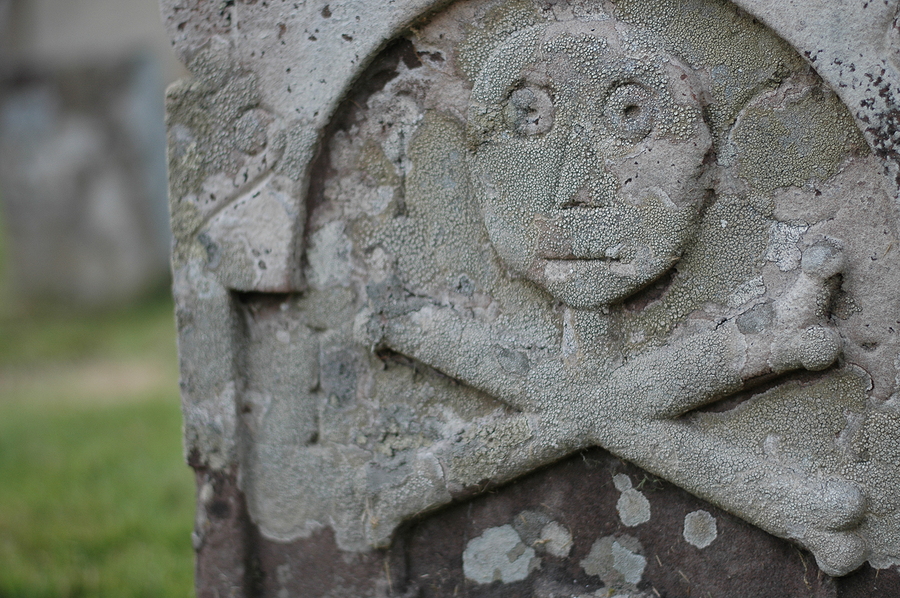
Memento mori: remember, you must die. The Latin phrase is believed to have originated with ancient conquering Roman leaders whose slaves whispered the phrase into their ears as they rode through the jubilant crowds of citizens.
On his website, Daily Stoic, Ryan Holiday writes:.
Epictetus would ask his students, “Do you then ponder how the supreme of human evils, the surest mark of the base and cowardly, is not death, but the fear of death?” And begged them to “discipline yourself against such fear, direct all your thinking, exercises, and reading this way — and you will know the only path to human freedom.”
Saint Benedict writes in his chapter, “The Tools for Good Works, to “day by day, remind yourselves that you are going to die.” Similarly, do the Hindus and Buddhists.
In our twenty-first century, however, there is little more terrifying to the modern mind than death. In fact, scientists like Ray Kurzweil have devoted their entire careers to achieving immortality. A few years ago, at a Silicon Valley Conference, Kurzweil declared that immortality would be achieved by 2030 with this phrase– “the singularity is nearer.” It’s the subtitle of his recent book,” When We Merge With AI.” Note the scientist doesn’t say if, but when.
Singularity: the merging of the machine with the human mind is Kurtzweil’s and other tech giants’ definition. Merging human brains with artificial intelligence to defeat disease and death, and the notions of creating superintelligence, superlongevity, and superhappiness are goals perceived by many tech giants and billionaires as the reasonable next step in human evolution.
Physicists define singularities as “places in the universe where the laws of physics simply break down.” With that in mind, we ask sardonically, What could possibly go wrong with the notion of transhumanism?
Pope Leo’s encyclical, MAGNIFICA HUMANITAS, sheds immense light on the emergence of artificial intelligence. It warrants our time and attention. The encylical challenges Luddites like me to rethink my extreme prejudice against “AI.”
…the Holy Spirit challenges us today regarding our relationship with technology and the ongoing digital revolution. Scientific discoveries are talents entrusted to humanity so that they may bear fruit (cf. Mt 25:14-30). Technology has the power to heal, connect, educate and protect our common home; but it can also divide, exclude and generate new forms of injustice. In the abstract, technology in and of itself is not a solution to humanity’s problems, just as it is not inherently evil. (italics mine) In practice, however, technology is never neutral, because it takes on the characteristics of those who devise, finance, regulate and use it. Therefore, the primary choice is not between a “yes” or “no” to technology, but rather between constructing Babel or rebuilding Jerusalem; between a power that claims to dominate the heavens and a people who work together in the presence of God to rebuild the walls of fraternal coexistence….
Thinking about time and death leads me to reconsider Heaven, the Kingdom of Heaven.
“You are not far from the Kingdom of God.”
The phrase is Jesus’ comment to the scribe who affirms Jesus’ reply to his question, “Which is the first of all the commandments?”
One of the scribes came to Jesus and asked him,
“Which is the first of all the commandments?”
Jesus replied, “The first is this:
Hear, O Israel!
The Lord our God is Lord alone!
You shall love the Lord your God with all your heart,
with all your soul, with all your mind,
and with all your strength.
The second is this:
You shall love your neighbor as yourself.
There is no other commandment greater than these.”
The scribe said to him, “Well said, teacher.
You are right in saying,
He is One and there is no other than he.
And to love him with all your heart,
with all your understanding,
with all your strength,
and to love your neighbor as yourself
is worth more than all burnt offerings and sacrifices.”
And when Jesus saw that he answered with understanding,
he said to him, “You are not far from the Kingdom of God.”
And no one dared to ask him any more questions.
What does Jesus mean when he says this to the scribe?
Most twenty-first-century Christians see our lives as minutes, months, and decades endured with gritted teeth until we finally escape this evil world and bodies escaping to a place somewhere in the skies that we call Heaven.
That view makes no sense when we read the interaction between Jesus and the scribe. Jesus’ remark indicates the scribe is close to the Kingdom now, as if it were here, at this time.
- “Why is the world the way it is? Because we have not gone inside ourselves to find him within our hearts.“
- “Love is the greatest power in the world, greater than any nuclear bomb“
- “We focus on the horror of who I am rather than the beauty of who He is.”
My readings of the radical theology of Protestant theologians like N.T. Wright and Dallas Willard convince me that many, maybe most of us Christians, Catholics included, have completely misread Jesus’ use of the phrase, “Kingdom of Heaven.” A misunderstanding with grave consequences for us individually and the Church.
Time belongs to God
I am repeatedly frustrated by how hard it is to get this point through the thick wall of traditional thought and language that most Christians put up….
…to see the death of the body and the escape of the soul as salvation is not simply slightly off course, in need of a few subtle alterations and modifications. It is totally and utterly wrong. It is colluding with death. It is conniving at death’s destruction of God’s good, image-bearing human creatures while consoling ourselves with the (essentially non-Christian and non-Jewish) thought that the really important bit of ourselves is saved from this wicked, nasty body and this sad, dark world of space, time, and matter!
The point is this. When God saves people in this life, by working through his Spirit to bring them to faith and by leading them to follow Jesus in discipleship, prayer, holiness, hope, and love, such people are designed—it isn’t too strong a word—to be a sign and foretaste of what God wants to do for the entire cosmos. What’s more, such people are not just to be a sign and foretaste of that ultimate salvation; they are to be part of the means by which God makes this happen in both the present and the future. That is what Paul insists on when he says that the whole creation is waiting with eager longing not just for its own redemption, its liberation from corruption and decay, but for God’s children to be revealed: in other words, for the unveiling of those redeemed humans through whose stewardship creation will at last be brought back into that wise order for which it was made…
Surprised By Hope: Rethinking Heaven, the Resurrection and Mission
The phrase” time belongs to God” is taken from Pope John Paul II’s encyclical, Dies Domini, and impresses me with obligation. That I did not die during those hours of critical illness a couple of months ago, that I was restored to my former non-prescription medication excellent health, is more God’s work than that of medicine. John’s ‘second chance’ comment has caused me to embrace more seriously than ever, the imperative to take Charlie Kirk’s advice and STOP In the Name of GOD.
I understand that the habits of a lifetime, the constant need to produce and be busy, must stop.
Ever since my conversion to Catholicism, I’ve worked to express and share my gratitude for the mercy of God, the pure joy and relief of admitting and confessing my true nature as a sinner, but I know now I cannot continue unless I adopt Charlie Kirk’s weekly rest in the Sabbath, praising the God of Abraham, Isaac, and Jacob. Thinking about the Shema:
Hear, O Israel!
The Lord our God is Lord alone!
You shall love the Lord your God with all your heart,
with all your soul, with all your mind,
and with all your strength.

1 thought on “It’s June: Thinking About Time and Death”
Hey there good friend prayers for a most holy retreat week!