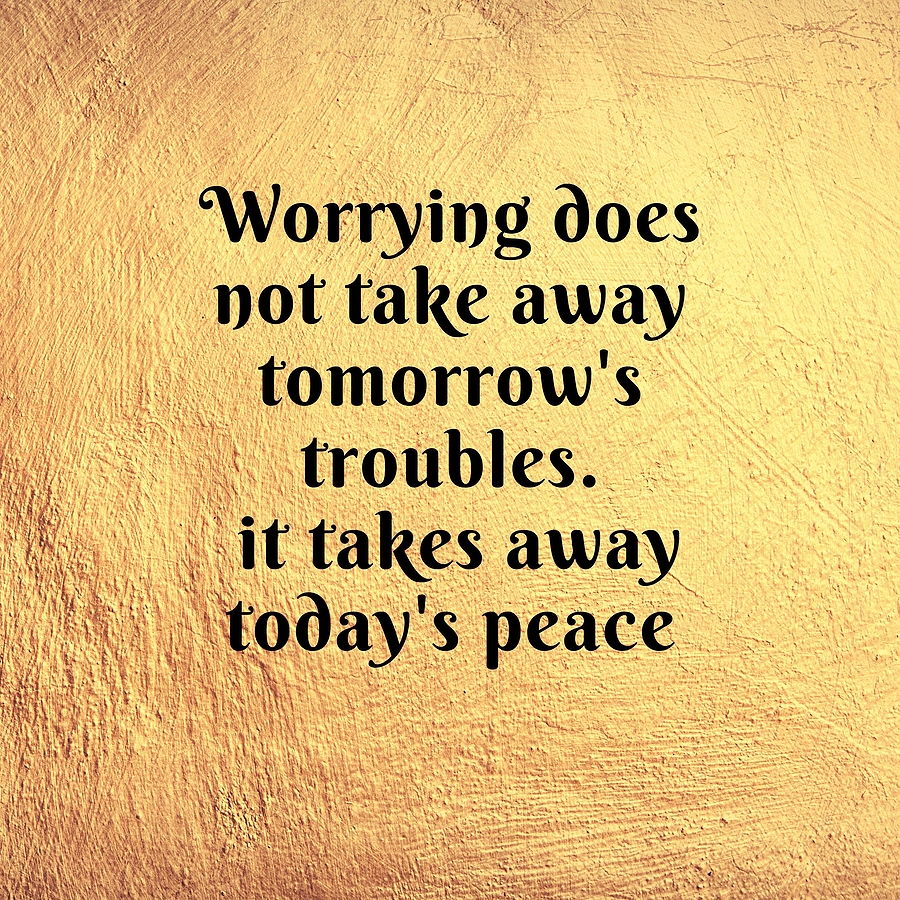
Happiness: Feeling or decision?
“So, how exactly, do you decide to be happy?” My friend looked bemusedly at me as she replied to my statement that I thought happiness was a decision we made.
“LOOK at that tree!” I exclaimed loudly and with vehemence, knowing that my reply to her question required more than a little explanation.
My psychologist husband entered the fray by asking “Lin, when was one of your happiest times in your life?”
Silent for a moment, I thought about his question. Reviewing major events in my life; hallmarks of ‘happy’ events, I asked myself if there were any times I could recall as being happier than I am now. The many graduations, becoming a Catholic, our marriage are certainly important but I said, “It’s now- I’m happiest now.” Happiness: Feeling or Decision?
For many, happiness is elusive. For months, years , for some, their entire life. All 8.3 billion souls on this planet crave happiness. That’s why there are books, songs, blogs and experts, all who claim possession of the key to happiness.
One of the difficulties about happiness is that it’s definitional.
Happiness is unique to each of us because, by definition, each of is solitary, exclusive, an individual, with widely varying interests, skills, goals and desires: the desire for happiness is however, universal: We each want to be happy. We even wrote it into our Constitution: The ‘unalienable right to the pursuit of happiness,” Jefferson wrote, as if happiness were an object we must chase, hunt, implying perhaps, an elusive goal.
The strong belief I have that happiness is a decision does not preclude any of the varying emotional states that wander in and out of my psyche; rather happiness is a constant, a grounding, an undercurrent on which emotions appear and disappear, like the clouds in the sky. A metaphor I learned decades ago during my Buddhist phase.
One of the Buddhists wrote sage advice about the ‘monkey chatter’ in our brains. The constant noise which precludes peace and happiness: “We can do nothing about any of the emotions and thoughts which wander into our minds. But we do not need to offer them a seat.” I am paraphrasing the quote read many years ago in Tricyle Magazine but not those crucial last nine words worth repeating: We do not need to offer them a seat.
Another obstacle to achieving a state of happiness is the belief that happiness is a feeling.
A confusion which permeates two other decisions which are often confused with feelings for many of us: Love and Faith.
That non-sequitur reply to my friend’s question is the key to happiness I was privileged to learn from a man earnestly in pursuit of it. The chase defined John Bradshaw, {R.I.P.}, causing him to run away from his faith the day before his ordination as a Catholic priest. He searched for his own happiness by teaching young students like me what he was learning about it: Action precedes the emotion.
Pacing up and down in front of the class, over and over Bradshaw quoted, usually in a shout, Santayana’s short poem or warning as it seemed to me back then,
Most people live their lives in the basement of a three-story house.
During a time of great, painful, and profound distress, I learned.
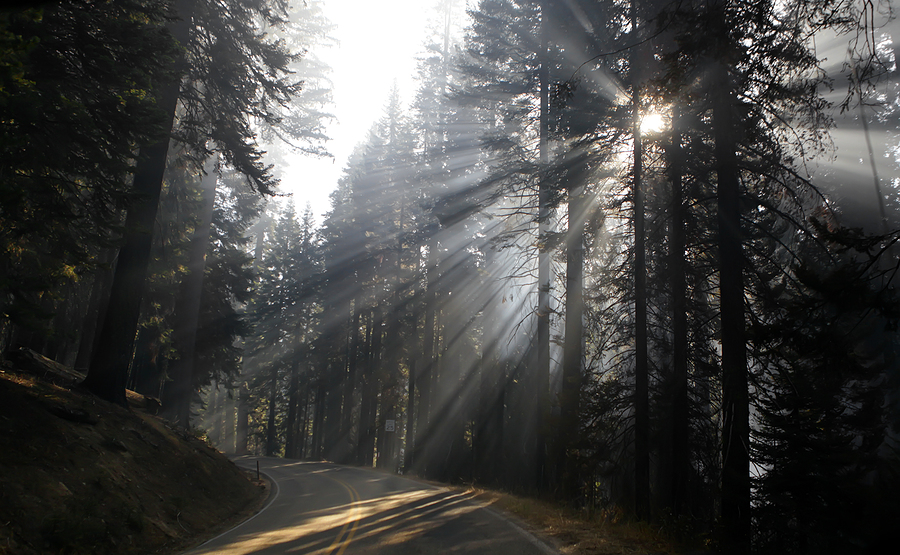
If we want to be happy, then act as if you are; take time to… LOOK at that tree!
“Develop a sense of the other…Over time, the feeling will come, the knowledge that yes, I am happy… exactly like faith and love.”
Although his admonition was metaphorical, there were many times during the years when nothing was clear, when I had no ground to walk on, nor a single clue as to how I wanted to spend my life, only vague resolutions. I would pull over to the side of the road next to a huge tree, and do exactly that.
I would LOOK at that tree…
The intensity of the monkey chatter starts to fade.
Over time, it disappears.
For me, trees have always been the most penetrating preachers. I revere them when they live in tribes and families, in forests and groves. And even more I revere them when they stand alone. They are like lonely persons. Not like hermits who have stolen away out of some weakness, but like great, solitary men, like Beethoven and Nietzsche. In their highest boughs the world rustles, their roots rest in infinity; but they do not lose themselves there, they struggle with all the force of their lives for one thing only: to fulfill themselves according to their own laws, to build up their own form, to represent themselves. Nothing is holier, nothing is more exemplary than a beautiful, strong tree. When a tree is cut down and reveals its naked death-wound to the sun, one can read its whole history in the luminous, inscribed disk of its trunk: in the rings of its years, its scars, all the struggle, all the suffering, all the sickness, all the happiness and prosperity stand truly written, the narrow years and the luxurious years, the attacks withstood, the storms endured. And every young farmboy knows that the hardest and noblest wood has the narrowest rings, that high on the mountains and in continuing danger the most indestructible, the strongest, the ideal trees grow.
Trees are sanctuaries. Whoever knows how to speak to them, whoever knows how to listen to them, can learn the truth. They do not preach learning and precepts, they preach, undeterred by particulars, the ancient law of life.
A tree says: A kernel is hidden in me, a spark, a thought, I am life from eternal life. The attempt and the risk that the eternal mother took with me is unique, unique the form and veins of my skin, unique the smallest play of leaves in my branches and the smallest scar on my bark. I was made to form and reveal the eternal in my smallest special detail.
A tree says: My strength is trust. I know nothing about my fathers, I know nothing about the thousand children that every year spring out of me. I live out the secret of my seed to the very end, and I care for nothing else. I trust that God is in me. I trust that my labor is holy. Out of this trust I live.
When we are stricken and cannot bear our lives any longer, then a tree has something to say to us: Be still! Be still! Look at me! Life is not easy, life is not difficult. Those are childish thoughts… Home is neither here nor there. Home is within you, or home is nowhere at all.
A longing to wander tears my heart when I hear trees rustling in the wind at evening. If one listens to them silently for a long time, this longing reveals its kernel, its meaning. It is not so much a matter of escaping from one’s suffering, though it may seem to be so. It is a longing for home, for a memory of the mother, for new metaphors for life. It leads home. Every path leads homeward, every step is birth, every step is death, every grave is mother.
So the tree rustles in the evening, when we stand uneasy before our own childish thoughts: Trees have long thoughts, long-breathing and restful, just as they have longer lives than ours. They are wiser than we are, as long as we do not listen to them. But when we have learned how to listen to trees, then the brevity and the quickness and the childlike hastiness of our thoughts achieve an incomparable joy. Whoever has learned how to listen to trees no longer wants to be a tree. He wants to be nothing except what he is. That is home. That is happiness.

2 thoughts on “Happiness: Feeling or Decision?”
“He wants to be nothing except what he is. That is home.”
I love this…. Thank you Lin!
“ He wants to be nothing except what he is. That is home. That is happiness.”
Yes! I love this topic. Well done Lin. Thank you.